
Let’s get straight to the point: the CNC Gantry Milling Machine Column and crossbeam are the backbone of the CNC gantry milling machine.
Hey, fellow machinists! Today, we’re picking up where we left off with the bed, diving into another core component of CNC gantry milling machines—the columns and beams.
Anyone in the CNC gantry game knows how critical these parts are. Simply put, they’re the backbone of the machine. The bed is the foundation, while the columns and beams form the framework that holds the entire machine together.
Whether it’s heavy-duty cutting, high-precision machining, or whether the machine maintains accuracy after three to five years of use, it all depends on how robust these two components are.
Don’t dismiss it as trivial: CNC Gantry Milling Machine Columns are far from “just two scrap metal poles.”
Some might say, “Aren’t columns just two scrap metal poles, and beams just a long iron bar? What’s there to talk about?” That’s a naive view.
We, practical folks, speak plainly. Today we’ll focus on the CNC Gantry Milling Machine Columns, with the crossbeam covered next time—all grounded in real-world experience from daily operation, calibration, and maintenance, no fluff.
Newbies can avoid pitfalls, and veterans will find resonance. Let’s thoroughly unpack everything you must know about CNC Gantry Milling Machine Columns.
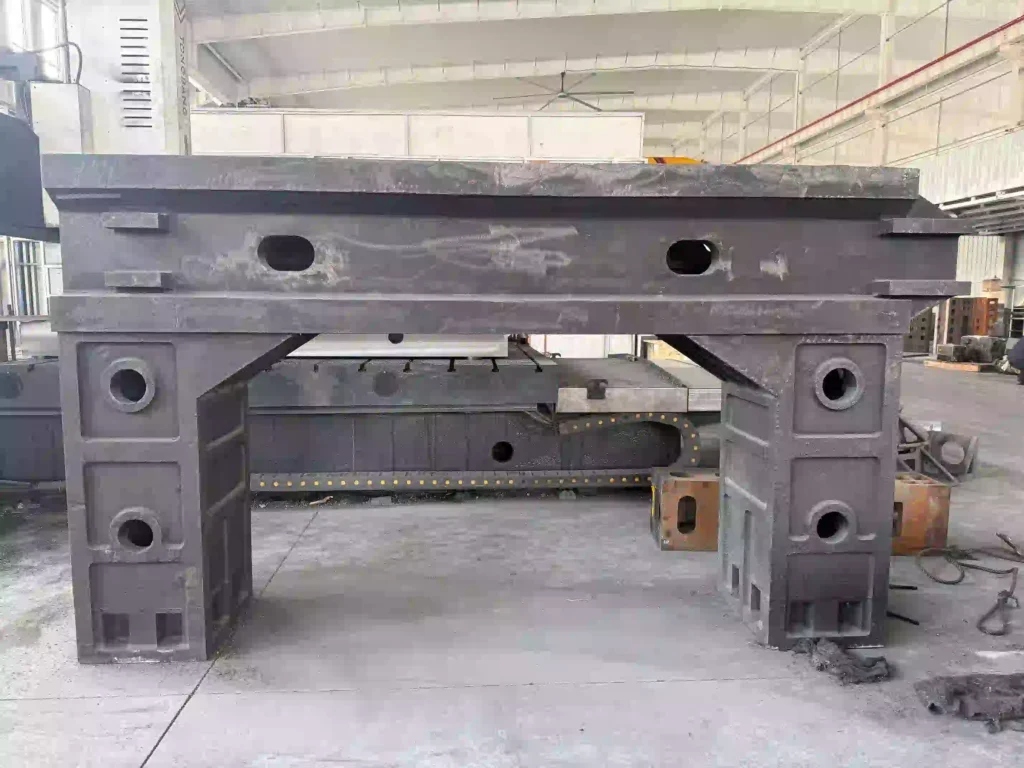
First, the columns: The machine’s “two thighs”—stability is key
Let’s start with the CNC Gantry Milling Machine columns. When we operate a machine tool, the first thing we see are those two tall columns on either side. One end connects to the bed, while the other supports the crossbeam—essentially the machine’s “two legs.”
These “legs” must be sufficiently sturdy and stable to withstand the cutting forces that follow. For machinists, especially those working with heavy components or thick plates, nothing is more frustrating than column “wobble.”
During cutting operations, even slight increases in cutting depth can cause the columns to vibrate. This results in wavy surfaces on machined parts, significant dimensional deviations, and sometimes even tool breakage—delaying schedules and wasting resources.
Why columns wobble: Two critical pitfalls to avoid
Why does column wobble occur? Based on practical experience, it boils down to two causes: subpar column material and machining precision, or inadequate installation and adjustment.
First, material quality: Some small manufacturers cut corners by using ordinary cast iron for columns, often with insufficient thickness. These columns may appear robust but lack rigidity, deforming under even moderate stress.
Selecting Column Material: Prioritize HT300, Never Skip Aging Treatment
When selecting machine tools, we professionals immediately examine the CNC Gantry Milling Machine column material. Prioritize gray cast iron of HT300 grade or higher, ideally with aging treatment applied.
Aging treatment essentially involves leaving castings to rest in natural conditions for a year or so, or using specialized equipment to bake them, releasing internal stresses. This prevents deformation and enhances stability.
I once used a machine tool with an un-aged column. Within a year, machining accuracy deteriorated noticeably. Upon disassembly, we discovered minor column deformation. The costly realignment was a clear loss.
Column machining accuracy: Guideways and perpendicularity must be calibrated
Regarding column machining accuracy, the most noticeable aspect during operation is the column guideways. These guideways serve as the travel path for the crossbeam. If the guideways lack sufficient flatness or straightness, the crossbeam will experience jamming or deviation during movement, ultimately compromising machining precision.
During routine machine setup, always use a dial indicator to check the parallelism of the column guideways. If any deviation is detected, promptly adjust the shims—don’t skip this step. Spending an extra ten minutes on initial calibration saves significant headaches later.
Additionally, column verticality is critical. If the CNC Gantry Milling Machine column and bed are not perpendicular, machined parts will exhibit tilt, particularly noticeable during flat milling operations. Use a level attached to the column side for repeated checks and calibration to ensure verticality meets standards.
Practical Advice: Don’t Sacrifice Quality for Low-Cost Columns
We in the CNC gantry machine industry are pragmatists who value solid workmanship. The CNC Gantry Milling Machine Column material and machining precision directly determine machine lifespan and part yield rates. Never compromise by choosing columns made from inferior materials or lacking stress relief treatment just to save money.
Some might argue that cheaper columns reduce initial investment. However, frequent deformation, accuracy deviations, and the costs of rework, recalibration, and part replacements far outweigh any upfront savings—making it a losing proposition.
Next time, we’ll dive into gantry beams: selection criteria, common pitfalls, and troubleshooting tips. Stay tuned, fellow practitioners, as we continue sharing hands-on expertise!