
Hey everyone! Last time, we covered the columns of CNC gantry milling machines. Today, we’re diving into another core component—the gantry milling beam.
We machinists, know the columns are the machine’s “two legs,” while the beam is its “spine.”
Spanning between the columns, it holds the ram and spindle, bearing all cutting forces transmitted to it.
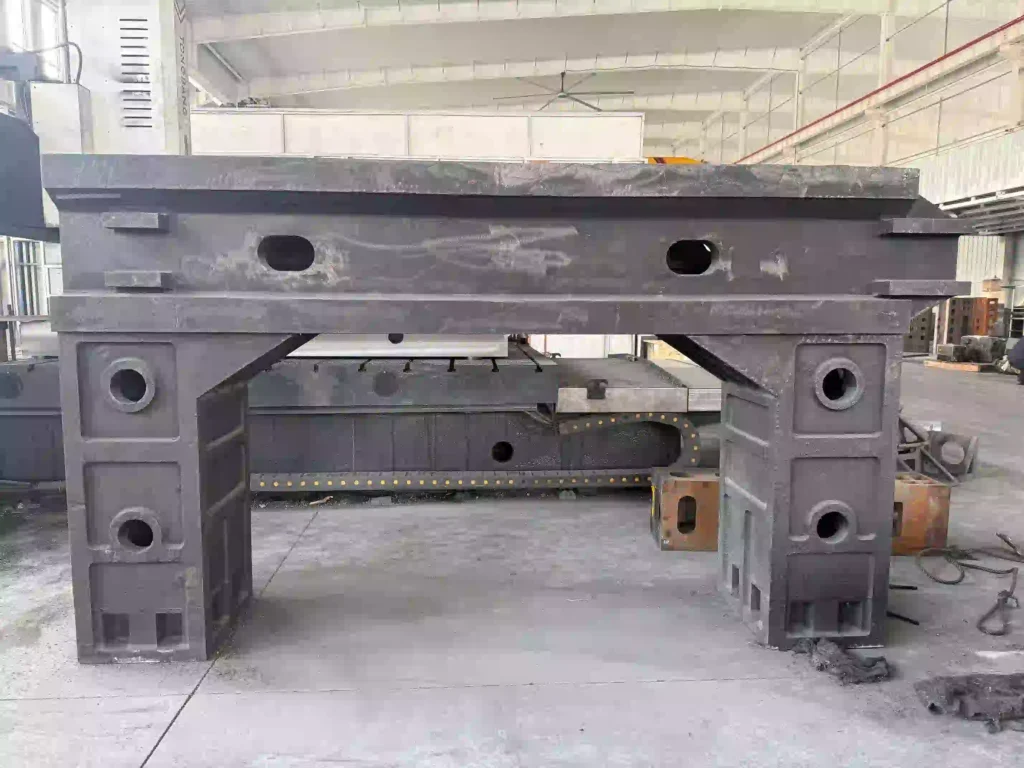
Therefore, the gantry milling beam’s rigidity and stability are even more critical than the columns. Today, from a practical user perspective, we’ll discuss beam selection, common issues, and pitfall avoidance techniques—all based on real-world experience.
Back to the gantry milling beam: The Machine’s “Spine,” Where Rigidity Reigns Supreme
The gantry milling beam is that long bar spanning the two columns. Though seemingly simple, it bears the brunt of all cutting forces throughout the machining process.
When machining parts—especially large, heavy ones—with slightly aggressive cutting parameters, insufficient beam rigidity can lead to problems. The most common issues are “mid-span arching” and “mid-span sagging,” which are major causes of rework.
Common Gantry Issues: “Center Sag” and “Center Dip” – Major Rework Hazards
Machinists frequently encounter this scenario: When machining large parts, as the gantry moves to the center position and cutting forces intensify, the gantry may “sag” slightly downward.
Though barely visible to the naked eye, the machined part develops a lower center compared to the edges—commonly called “center bulge” or “center concavity.” This error may be imperceptible visually, but caliper measurements reveal it exceeds tolerances, necessitating rework.
I once encountered this issue while machining a 2-meter-long thick plate. Initial setup seemed flawless, but post-processing measurements revealed a 0.04mm deviation at the center. Re-machining was necessary, delaying production by a day and wasting material—a painful loss.
Choosing the Beam: Prioritize Box-Type Cross-Sections, Don’t Blindly Pursue Length
The primary causes of the gantry milling beam “mid-arch” or “mid-hollow” deformation are improper cross-section design or insufficient wall thickness. When selecting machine tools, always examine the beam cross-section and prioritize box-section beams.
A box-section beam resembles a hollow box, offering greater rigidity than solid beams while being lighter. It effectively distributes cutting forces, minimizing deformation.
I once compared two machines: one with a solid beam and another with a box-type beam. When machining 50mm-thick steel plates, the solid-beam machine produced parts with a central deviation of 0.03mm, while the box-type beam machine achieved only 0.01mm deviation—a stark difference.
Additionally, the gantry milling beam length requires careful consideration. Select based on your machining needs; longer isn’t always better. Longer beams are harder to maintain rigidly. If your typical parts aren’t large, avoid unnecessarily long beams to prevent waste and reduce deformation risks.
Beam Connections: Bolt Tightness, Daily Check
Beyond material and design, the gantry milling beam connection methods matter. Most beams we see are bolted to the columns. While simple, this connection requires constant attention to bolt tightness.
During operation, machine tools generate vibrations. Over time, these vibrations can loosen bolts, causing beam displacement and compromising machining accuracy.
Therefore, as part of routine maintenance, always inspect the bolts connecting the beam to the columns before starting the machine each day. Check for any looseness and tighten immediately. Don’t take chances. Thinking “it’s fine once or twice” and waiting for problems to arise is too late.
Practitioner’s Advice: Beam Selection—Details Determine Success
For those in the CNC gantry machine industry, selecting a beam is like choosing a reliable partner—it must be dependable and sturdy. Don’t just judge by appearance; scrutinize the cross-section design, material composition, and wall thickness, as these are the critical factors determining beam rigidity.
Many newcomers to the industry initially focus solely on price when selecting machines, overlooking gantry quality. Only after frequent machining errors and rework do they realize their mistake.
Next time, we’ll dive into daily maintenance tips for columns and gantries—teaching you how to extend their lifespan and reduce failures. Stay tuned, fellow practitioners! We’ll keep sharing hands-on expertise!