How to choose a CNC gantry milling machine? Let’s be real—we factory guys don’t like fancy talk. We just want practical tips that work on the workshop floor, no fluff, no marketing gimmicks.
CNC gantry milling machines are everywhere in our line of work—large mold processing, plate cutting, structural part machining, and heavy industry production. But when they need to choose a CNC gantry milling machine, so many bosses mess up the purchase, only comparing prices and basic parameters.
The result? Unstable accuracy, weak cutting power, and long-term production losses. I’ve seen it too many times. Today, I’ll share 8 down-to-earth tips based on my 10+ years of workshop experience, to help you pick the right one once and for all when you choose a CNC gantry milling machine.
Table of Contents
1. Confirm Your Workpiece and Process First (Key to how to choose a CNC gantry milling machine)
When you need to choose a CNC gantry milling machine, never check machine specs before knowing your actual needs. That’s the biggest mistake most bosses make. You gotta start with your own workpieces—no exceptions.
Classify your regular parts by size, material, thickness, and maximum dimension. For example, if you usually process steel plates with a thickness of 20 mm and 1500*3000mm size, or box parts with a maximum height of 500mm, a standard gantry machine with a 2000*4000mm table will be more than enough.
Gantry machines are perfect for plates, box parts, and large molds—like the 1000*2000mm mold cavities we often process in the workshop. But if you’re working on small rotating parts like shafts or sleeves (usually within 100mm in diameter), don’t waste money on a gantry machine—ordinary CNC lathes or machining centers are enough and cheaper, saving you tens of thousands of dollars upfront.
Always leave 10%–20% extra space on the table size and axis travel. Trust me, you’ll thank me later. On the workshop floor, you’ll inevitably get slightly larger workpieces or need space for clamps. No extra space means you’ll be stuck with special orders.
When you need to choose a CNC gantry milling machine, Material matters too. Hard materials like mold steel and stainless steel need strong rigidity. Soft materials like aluminum, copper, and non-metals focus more on high speed and smooth surface finish.
Separate roughing and finishing if possible. Mixing heavy cutting and fine milling on one machine will ruin its accuracy fast—you’ll end up spending more on repairs.
2. Frame Rigidity Decides Long-Term Stability
A gantry machine’s service life depends entirely on its rigidity. No rigidity, no stability—simple as that. When you need to choose a CNC gantry milling machine, if rigidity is weak, you’ll get vibration and abnormal noise during cutting, ruining tools and workpieces.
So, when you need to choose a CNC gantry milling machine, first, check the bed, column, and beam. They must use qualified gray cast iron or ductile iron, with secondary aging treatment—this step is non-negotiable.
I once saw a boss buy a cheap gantry machine that skipped this treatment; it worked well for the first 6 months, but after a year of heavy cutting, the bed warped by 0.08mm, making all processed workpieces unqualified.
This eliminates internal stress and prevents deformation after years of heavy work. When you go to the supplier’s factory to inspect the machine, you can ask to see the aging treatment report—if they can’t provide it, don’t buy it, no matter how cheap it is.
Cheap machines skip this step—they work well at first, but after 1-2 years, the bed warps and the column tilts. Correcting it is more expensive than buying a quality machine upfront.
When you choose a CNC gantry milling machine, choose the right structure: Fixed-beam gantries have the best rigidity (great for heavy cutting and high-precision molds). Movable-beam gantries are flexible for different workpiece heights. Movable-column ones are for extra-long, oversized parts.
For guide rails and ball screws: Hard rails are better for tough materials; linear rails are smoother for high-speed finishing. C3-grade ground screws are a must—they ensure stable cutting without vibration marks.
3. Choose Accuracy According to Real Production
Don’t overpay for ultra-high precision you’ll never use. We, factory guys, value cost-effectiveness—why spend extra on precision you don’t need?
Standard accuracy (±0.05mm) is enough for regular steel structure cutting, plate drilling, or simple box processing. Precision-grade (±0.001-0.005mm) is only needed for complex molds and high-surface-quality parts.
Repeat positioning accuracy is more important than single positioning accuracy. It decides whether your mass production is stable. If it’s poor, some workpieces will be qualified, some not, wasting materials and time.
Leave a small tolerance margin (0.01-0.02mm) during on-site processing. Workshop temperature, humidity, and tool wear all affect precision—margin saves you from scrap.
4. Spindle Selection Directly Affects Cutting Efficiency
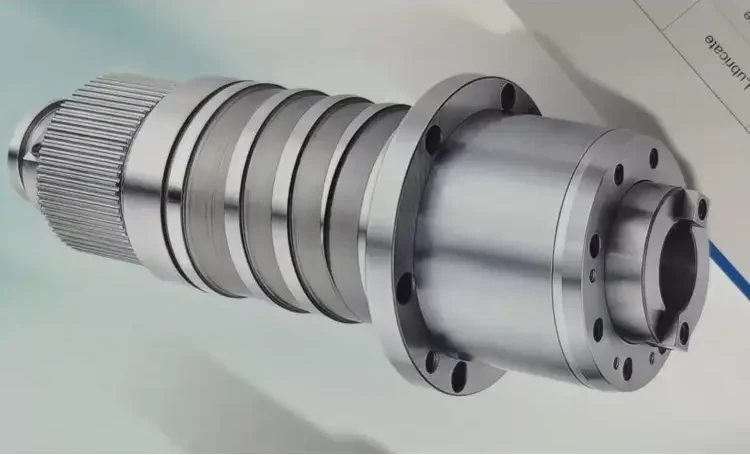
When you choose a CNC gantry milling machine, the spindle is the heart of the gantry machine. Choose the wrong one, and your whole production rhythm is messed up. There are two main types: gearbox spindles and electric spindles.
Gearbox spindles: Low speed, high torque—perfect for heavy roughing on hard steel, like mold steel (HRC 55-60) or thick stainless steel plates (over 30mm). When we process large mold blanks in the workshop, we use a 22KW gearbox spindle; it cuts smoothly without power loss during tough cutting, no tool jamming, and can handle 5mm deep cuts in one pass. But they’re a bit noisy—you’ll get used to it in the workshop—and need regular maintenance, like changing the gear oil every 6 months, which is a small cost compared to the trouble of frequent tool changes.
Electric spindles: High speed, low noise, high precision—great for aluminum, plastic, and non-metal fine finishing. They’re easy to maintain, but high-speed ones need constant temperature cooling to avoid thermal deformation.
Choose spindle power based on your needs: 7.5-15KW for ordinary processing; over 15KW for heavy cutting. Pick standard interfaces (BT40/BT50) for easy tool replacement. For more details, check our internal guide: CNC Gantry Milling Machine Bed, Spindle & Transmission Guide (Internal Link).
5. Stick to Popular Mature CNC Control Systems
The CNC gantry milling machine control system is the brain of the machine. Unpopular, cheap systems are trouble—program errors, axis deviations, frequent breakdowns. So when you need to choose a CNC gantry milling machine, we need stability, not headaches.
Prioritize mainstream brands: FANUC, SIEMENS, Mitsubishi. They’re easy to operate—new workers can master them in a few days. Their after-sales service is reliable, and spare parts are easy to find.
When you choose a CNC gantry milling machine, make sure the system has CAM simulation and anti-collision functions. These prevent tool collisions and scrap workpieces—cheap systems skip them, costing you more in the long run. For official standards, refer to the ISO Technical Committee website.
6. Tool Magazine & Tool Setting: Configure Only What You Need
Not every factory needs a big automatic tool magazine. When you need to choose a CNC gantry milling machine, configure based on your production batch—no waste, no extra cost.
Small-batch, customized orders: A high-precision tool setter is enough. It’s cheaper, more reliable, and has a low failure rate—way better than a cheap tool magazine.
Mass production with frequent tool changes: Install a 16-24 tool magazine. It automates tool changes, saves time, and reduces worker fatigue.
Unify tool holder specs (BT40/BT50) in your factory. This makes tool change between machines easier, reduces inventory, and improves installation precision.
7. Add Auxiliary Accessories Wisely
When you choose a CNC gantry milling machine, auxiliary accessories aren’t core, but they affect stability and service life. Focus on practicality, not extra functions.
Basic accessories are non-negotiable: Chip removal system (keeps iron chips off the table), sealed protection (prevents dust and cutting fluid from damaging parts), large-flow cooling system (reduces tool wear and workpiece deformation).
Advanced accessories (automatic worktable, multi-axis linkage) can be added later—only when your orders need them. Unnecessary functions just increase initial cost and maintenance trouble.
8. Calculate Full-Cycle Cost & Focus on Local After-Sales
When you need to choose a CNC gantry milling machine, don’t just look at the purchase price. Full-cycle cost includes installation, training, maintenance, and downtime loss—these are the hidden costs that many bosses ignore. For example, a cheap machine costs 50,000 yuan less upfront, but if it breaks down once a month, each downtime takes 2 days to repair, and each day of downtime costs your factory 10,000 yuan in lost orders. In a year, that’s 240,000 yuan in downtime loss alone—way more than the money you saved. Cheap machines cost more in the long run, and we factory guys can’t afford that waste.
When you choose a CNC gantry milling machine, choose suppliers with local service teams. On-site installation, operator training, and 24-hour after-sales support are a must. Fast repairs save you from huge downtime losses.
Check spare parts supply—suppliers that can provide parts quickly keep your machine running. Remember: Downtime loss is way more than the money you save on a cheap machine.
CNC Gantry Milling Machine Selection Comparison Table
| Selection Item | Small Factory | Medium-Sized Factory | Heavy-Duty Processing |
| Accuracy | Standard (±0.05mm) | Precision (±0.005mm) | Precision (±0.003mm) |
| Spindle | Electric (7.5-15KW) | Gearbox (15-22KW) | Gearbox (>22KW) |
| Tool System | Tool Setter | 16-24 Tool Magazine | 24-32 Tool Magazine |
| Accessories | Basic (Chip Removal, Cooling) | Basic + Thermal Compensation | Full Set + Multi-Axis Linkage |
Conclusion
how to choose a CNC gantry milling machine? It’s simple for us factory guys: match the machine to your workpieces, prioritize rigidity, choose reasonable accuracy and spindle, stick to mainstream systems, configure on demand, and focus on after-sales. Don’t be fooled by suppliers who brag about “high configuration at low prices”—most of them cut corners on bed material or skip aging treatment. I’ve seen too many bosses regret buying such machines; they end up spending more on repairs than the machine itself.
Avoid over-specification and cheap, low-quality machines. A well-matched machine brings stable production and fast investment return—that’s what we really need.