CNC gantry milling machine buying mistakes are more common than you think, and they’re costly—way more costly than most factory owners realize. As someone who’s spent 16 years running CNC machining workshops, managing equipment purchases, and fixing the messes from bad buying decisions, I’ve seen it all. Most buyers get caught up in price tags and flashy specs on paper, but real workshop life teaches us one thing: the wrong machine doesn’t just waste money upfront—it costs you thousands in scrap parts, unplanned downtime, premature repairs, and even lost orders.
Today, I’m breaking down the 7 worst CNC gantry milling machine buying mistakes I’ve seen—no fancy theory, no marketing hype, just straight talk from one factory guy to another. These CNC gantry milling machine buying mistakes have cost my clients and peers 100k–300k yuan each. I’m sharing them so you don’t make the same costly errors. Let’s cut to the chase.
1. The 1st of the CNC gantry milling machine buying mistakes: Skipping Casting Stress Relief (The Biggest Hidden Trap)
This is the worst hidden mistake—one that ruins machines long-term. Cheap CNC gantry mills almost always skip secondary aging treatment for the bed, columns, and beams. Most buyers never ask about it, and by the time they notice a problem, it’s too late.
Let me keep it simple: secondary aging (casting stress relief) means heating the cast iron parts to 550–600°C, then cooling them slowly over 24–72 hours. This gets rid of internal stress from the casting process. Skip it, and the bed, columns, and beams will slowly warp under heavy cutting—you can’t see it with your eyes, but the precision goes right out the window.
I had a client in Shandong who bought a 380,000-yuan gantry mill—50,000 yuan cheaper than a quality one—to cut mold steel. In just 8 months, the bed twisted 0.12mm. That tiny warp made every mold part he cut out of tolerance. He scrapped 12 mold blanks (18,000 yuan each), plus 2 weeks of downtime to fix the machine. Total loss: 266,000 yuan—way more than the 50k he saved upfront.
Here’s how to avoid it: Always ask the supplier for a stress relief test report. Good machines use HT250–HT300 gray cast iron (standard for heavy CNC gear) and go through 2–3 rounds of aging to get rid of residual stress. For more information, please check the official ISO standards on casting quality. If they can’t show you the report, walk away—no matter how cheap it is.
2. The 2nd of the CNC gantry milling machine buying mistakes: Blindly Chasing Ultra-High Precision (Wasting Money on Stuff You Don’t Need)
“Higher precision = better machine” is a lie that costs factory owners tens of thousands every year. I’ve lost track of how many clients bought ultra-precision gantry mills when they didn’t need to—and instantly regretted it.
Let’s be practical: 90% of workshop jobs don’t need “mirror finish” precision. Standard precision (positioning accuracy ±0.015mm/m, repeat positioning accuracy ±0.008mm) is more than enough for most work: steel structure cutting, plate drilling, regular mold work, and structural parts.
High precision (positioning accuracy ±0.008mm/m or better) is only for special jobs: complex injection molds, aerospace parts, high-gloss surfaces, or parts with super-tight tolerances (±0.005mm or less). The problem? Ultra-precision machines cost 30–50% more upfront, and their maintenance costs double—they’re finicky about temperature, foundation stability, even the cutting fluid you use.
A client in Jiangsu bought a high-precision gantry mill to cut steel brackets for construction. The brackets only needed a tolerance of ±0.05mm, but he thought “better safe than sorry” and spent an extra 110,000 yuan on ultra-precision. After 2 years, he realized it was a waste: parts weren’t better, efficiency didn’t go up, and he was spending twice as much on maintenance (calibrating every month instead of every 3 months).
Fix it easily: Match the machine’s precision to your parts’ tolerance. Ask your engineer what the maximum allowable error is for your most common parts, then pick a machine that meets that—no more. Don’t pay for specs you’ll never use; put that money toward better rigidity or local after-sales instead.
3. The 3rd of the CNC gantry milling machine buying mistakes: Choosing the Wrong Spindle Type (Killing Efficiency & Breaking Down Constantly)
The spindle is your CNC gantry mill’s heart. Pick the wrong one, and it’s like putting a diesel engine in a sports car—it works, but it’s slow, inefficient, and always breaking down. There are two main types, and they’re for totally different jobs. Mix them up, and you’ll lose money fast.
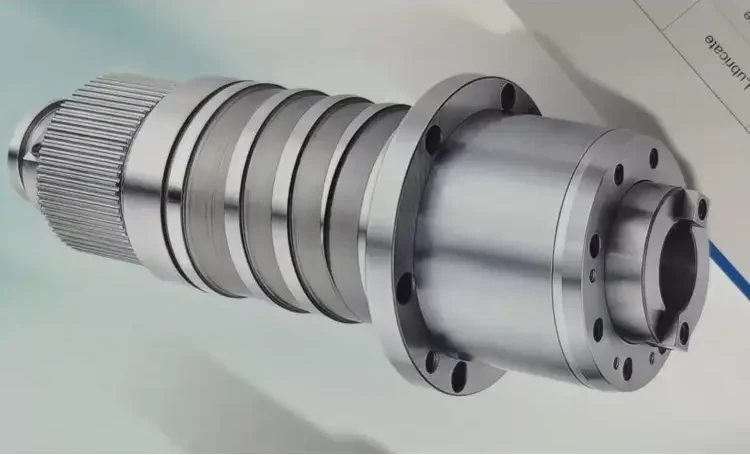
Gear Spindle (Gearbox Spindle): This is your workhorse for heavy cutting. It’s made for low speed and high torque (usually 2000–5000 N·m), perfect for hard materials like mold steel (HRC 55–60), stainless steel, and thick carbon steel plates. Gear spindles don’t lose power at low speeds, so they’re great for heavy roughing (deep cuts, high feed rates) and can handle non-stop heavy work without overheating.
The only downside? They’re a bit noisier than electric spindles, and you need to maintain them—change gear oil every 6 months, check gear wear once a year. But for hard materials and heavy cutting, you can’t skip it.
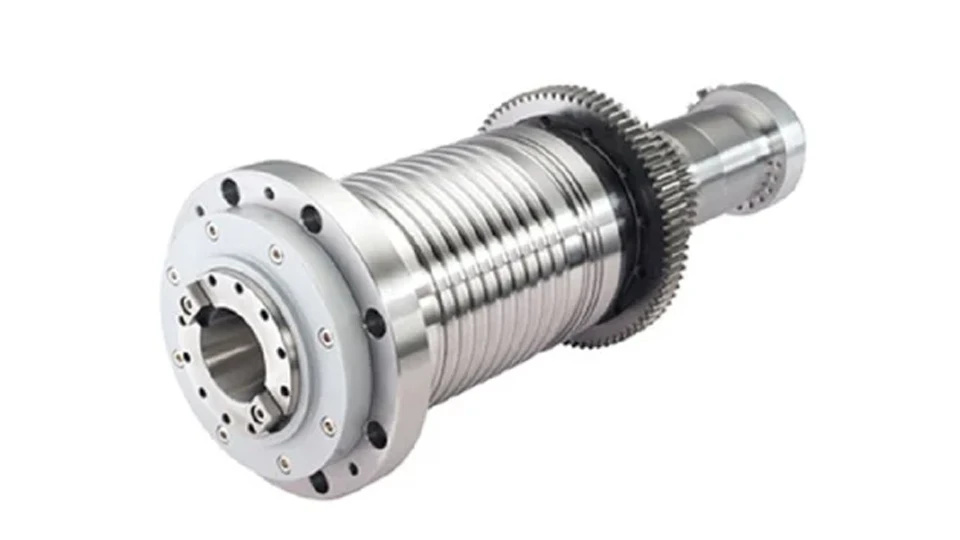
Electric Spindle (Motor-Built-in Spindle): This is for precision work—high speed (6000–15000 rpm) and low vibration. It’s perfect for soft materials like aluminum, copper, plastic, non-metals, and fine finishing (smooth surfaces, tight tolerances). Electric spindles are quieter, smoother, and easier to maintain—no gear oil changes, just regular cleaning and cooling checks.
But here’s the catch: They can’t handle heavy cutting. A client in Zhejiang used an electric spindle to rough-cut mold steel blanks. It overheated in 2 hours, and the bearings burned out every 3 months. Each bearing replacement costs 8,000 yuan, plus 2 days of downtime—total annual loss: 48,000 yuan. He ended up replacing the whole spindle for 30,000 yuan.
Rule of thumb: Hard materials or heavy roughing? Go with a gear spindle. Soft materials or fine finishing? Electric spindle. For more details on picking the right spindle, read our internal guide—CNC Gantry Milling Machine Spindle.
4. The 4th of the CNC gantry milling machine buying mistakes: Ignoring Machine Rigidity (Shortening Machine Life & Ruining Parts)
Rigidity is your machine’s backbone—and it’s the most overlooked thing when buying. Many buyers look at spindle power and precision, but ignore how rigid the frame is. That’s a mistake—rigidity directly affects how long the machine lasts, tool life, and consistent accuracy.
Rigidity is just how well the machine resists bending under load. A rigid machine won’t vibrate when cutting, so parts have better surface finish, tools last longer, and accuracy stays consistent. A flimsy machine vibrates, leaving chatter marks on parts, wearing out tools fast, and even damaging the spindle or CNC system.
Here’s what to check for rigidity—no fancy tests needed:
1. Beam Thickness & Column Width: Cheap machines cut corners with thin beams (less than 80mm) and narrow columns (less than 300mm). A good gantry mill needs a beam at least 100mm thick and columns 350mm wide or more for heavy work.
2. Reinforced Ribs: The bed, columns, and beam should have internal ribs to spread weight and cut down on vibration. No ribs, and the frame will bend under heavy load.
3. Guide Rail Type: For heavy cutting, pick hard rails (box ways)—they’re wear-resistant, handle high pressure, and are more rigid. For high-speed finishing, linear roller rails are smoother but less rigid.
4. Connection Structure: Columns, beam, and bed should be bolted together with high-strength bolts and reinforcement plates. Loose connections cause vibration and deformation over time.
A workshop in Guangdong bought a gantry mill with a 70mm thin beam and no reinforced ribs. Within a year, the beam started bending during heavy cutting, causing vibration. Parts had poor surface finish, and tool life dropped 40%—they were changing cutters twice as often. Fixing the beam cost 20,000 yuan, plus 15,000 yuan in wasted tools and scrap parts.
5. The 5th of the CNC gantry milling machine buying mistakes: Oversizing the Tool Magazine (Wasting Money & Adding More Problems)
“Bigger is better” doesn’t work for tool magazines. But lots of factory owners buy the biggest one they can afford, thinking it’ll make them more efficient. All it does is waste money, cause more downtime, and add unnecessary hassle.
Tool magazines are for automatic tool changes to save time—but the size you need depends on your batch size and how many tools you use per part. Here’s how to pick the right one, no guesswork:
• Small Batches/Custom Orders: If you do small batches (1–10 parts per order) or custom work that uses 5–8 tools per part, an 8–12 tool magazine is more than enough. Many small workshops don’t even need a tool magazine—a high-precision tool setter is cheaper, simpler, and breaks less often.
• Medium Batches: For medium batches (10–50 parts per order) with 8–15 tools per part, a 16–24 tool magazine is perfect. It’s efficient, not too expensive, and rarely breaks down.
• Mass Production: For large batches (50+ parts per order) with frequent tool changes (15+ tools per part), a 24–32 tool magazine makes sense. Anything over 40 tools is only for special jobs (like complex molds with 20+ tools).
A small factory in Fujian made this mistake: They bought a 40-tool magazine for small-batch custom parts that only needed 6–8 tools per order. The magazine cost an extra 32,000 yuan and was a headache to maintain. They had weekly issues—jammed tools, misaligned changes—adding 30% more downtime. After 6 months, they disconnected it and went back to manual tool changes—32,000 yuan down the drain.
Simple formula: Tool magazine capacity = average tools per part × 1.5. That gives you a little extra room without overcomplicating things.
6. The 6th of the CNC gantry milling machine buying mistakes: Ignoring the Professional After-Sales System for Export (High Risk of Cross-Border Downtime)
CNC gantry milling machines are large, complex, and high-tech. When problems occur overseas, cross-border maintenance, remote debugging, and spare parts transportation are much more troublesome than in domestic markets. Many overseas buyers only focus on parameters and prices, but ignore the supplier’s export after-sales capabilities. As a result, the machines they buy are either unattended or have slow responses, causing huge losses.
We have seen many overseas clients fall into this trap:
A Thai client once purchased a gantry mill from a small domestic manufacturer that only did “one-time sales” and had no professional export after-sales process. Once the machine gave an alarm, due to the lack of a sound remote troubleshooting mechanism, the client had to translate the fault by themselves, communicate repeatedly via email, and wait for the engineer to schedule a visit.
In the end, the machine was down for a full 8 days, which not only delayed the construction period but also caused the client to lose hundreds of thousands of RMB in orders, seriously damaging their confidence in cooperation.
It is obvious that exporting equipment is not the end after sale; after-sales capability is the foundation for long-term cooperation.
Although we do not have global locations like large manufacturers, as a responsible entity factory, we have achieved the following four practical points in overseas after-sales service, which can fully ensure that clients use the equipment with peace of mind:
1. Remote Hands-On Guidance for Quick Troubleshooting When minor faults occur in the equipment, we will provide real-time guidance through video calls and remote software, with English customer service following up throughout the process. Generally, 80% of faults can be solved remotely, avoiding downtime.
2. Clear Fault Manuals + Multilingual Installation Videos. From the delivery of the equipment, we will provide multilingual (English, Russian, Spanish, etc.) operation guides and fault diagnosis manuals. The client’s team can conduct self-inspection at any time to reduce reliance on us.
3. Engineer Cross-Border On-Site Service (Arranged on Demand) For complex faults, major maintenance, or debugging needs, we can arrange for engineers to visit overseas clients cross-border by appointment according to their schedule. Although we do not make mandatory 24-hour commitments, we will ensure that engineers arrive on time and solve the problem thoroughly.
4. Fast Shipment of Common Spare Parts, Priority for Overseas Clients. We prepare a sufficient inventory of common spare parts in advance (bearings, control systems, belts, bolts, etc.). For overseas clients, we will prioritize the shipment of spare parts to minimize the transportation cycle and reduce downtime caused by waiting for parts.
For us, selling equipment is just the beginning, and serving clients is our responsibility. We do not promise unrealistic global outlets; we only provide a down-to-earth export after-sales system that can truly solve problems.
7. The 7th of the CNC gantry milling machine buying mistakes: No Expansion Margin (Only Planning for Today, Not Tomorrow)
Lots of factory owners buy a gantry mill that fits their current parts perfectly—but forget to plan for growth. That means replacing the machine too soon, wasting tens of thousands in investment.
Simple rule: The machine’s table size and axis travel should be 10–20% bigger than your current largest part. Here’s why it matters:
1. Clamping Space: You need room to clamp the part to the table. If the table is the same size as the part, you can’t attach clamps—you’ll damage the part, or it’ll shift during cutting.
2. Future Orders: As your business grows, you’ll get orders for bigger parts. A machine with no extra room will be useless for those, forcing you to buy a new one.
3. New Product Lines: If you add new products, you might need to process different-sized parts. Extra travel gives you flexibility—no need to buy a new machine.
A factory in Hunan made this mistake: They bought a machine with a 2000×3000mm table for their current largest part (1800×2800mm). Two years later, they got a big order for 2200×3200mm parts—but the machine was too small. They sold the old one for 30% of its original price (losing 266,000 yuan) and bought a new one for 440,000 yuan. Total loss: 386,000 yuan—all because they didn’t leave a 10% margin.
CNC Gantry Milling Machine Buying Mistakes Comparison Table
| Mistake | Consequence | Cost Loss (Yuan) | How to Avoid |
| No stress relief | Frame deformation, accuracy loss, scrap parts | 100,000–300,000 | Low efficiency, frequent breakdowns, and tool wear |
| Over-precision | Higher upfront cost, doubled maintenance | 30–50% extra price | Match precision to workpiece tolerance |
| Wrong spindle type | Long downtime, lost orders, and client loss | 30,000–80,000/year | Gear spindle for hard steel; electric for soft |
| Poor rigidity | Vibration, short tool life, poor surface finish | 20–40% lower efficiency | Choose fixed beam, thick casting, hard rails |
| Oversized tool magazine | Extra cost, frequent failures, more downtime | 20,000–50,000 extra | Capacity = tools/part × 1.5 |
| No local after-sales | Long downtime, lost orders, client loss | 50,000–200,000/incident | Check local service, 24h response, spare parts |
| No expansion margin | Premature machine replacement | 40–60% investment loss | Leave 10–20% extra travel & table size |
Final Practical Tips for Factory Buyers
Buying a CNC gantry milling machine is a big investment—one that should last 10+ years if you get it right. Here are 5 no-nonsense tips to avoid these CNC gantry milling machine buying mistakes and get a machine that works for your workshop:
1. Inspect the Factory in Person: Don’t trust photos or videos. Go to the supplier’s factory and check the casting quality, welding, stress relief, and assembly. If they won’t let you visit, they’re hiding something.
2. Do a Heavy Cutting Test: Ask them to run the machine at 80% load (cutting the same material and thickness you use) for at least 2 hours. If it shakes or makes weird noises, walk away.
3. Check Core Part Brands: The CNC system (Siemens/FANUC/Mitsubishi), guide rails (THK/Hiwin), and ball screws (C3-grade) should be from trusted brands. Cheap, unknown brands break down often.
4. Visit Local Users: Ask the supplier for 2–3 local clients with the same machine. Go see it in action and ask how the after-sales is—real users tell the truth.
5. Fix After-Sales Terms in Writing: Don’t rely on verbal promises. Put everything in the contract—response time, warranty, on-site service, spare parts. That way, you’re protected if they drop the ball.
Avoid these CNC gantry milling machine buying mistakes, and you’ll get a stable, durable machine that saves you money, cuts downtime, and helps your business grow. As us factory guys say: “A good machine makes money every day; a bad machine loses money every day.” Don’t let a bad buy hold your workshop back.