
CNC gantry mill precision and specifications are the make-or-break factors when shopping for a CNC gantry milling machine — many buyers fixate only on the numbers on the spec sheet: travel lengths, spindle RPM, marked tolerances, and all the rest.
But here’s the hard truth from the factory floor: not all specs hold the same weight in real production. A machine that looks great on paper often falls flat day-to-day, all because of small structural flaws you can’t see from a brochure.
We’ve been building and running these machines for over 10 years — we’ve seen the wins and the costly mistakes. The real secret to picking the right machine isn’t chasing high numbers. It’s knowing which specs actually move the needle on part quality, stability, and your bottom line.
This guide breaks down the specs that matter, explains what they actually do for your work, and keeps you from throwing money at the wrong features.
1. What Is the Typical Precision of a CNC Gantry Milling Machine?
For most industrial CNC gantry mills, the standard precision numbers you’ll see are consistent across reliable brands:
- Positioning accuracy: ±0.01 mm per full axis travel
- Repeatability: ±0.005–0.008 mm
This range isn’t random — it’s the sweet spot for the work most shops do, including:
- Aluminum parts and aerospace components
- Precision mold cores and cavities
- Plastic, composite, and non-ferrous metal parts
Real Shop Tip: CNC gantry milling machine precision isn’t just a number. It lives or dies by the machine’s rigid build and vibration control. Even the tightest tolerance means nothing if the machine flexes mid-cut.
How accurate is a CNC gantry milling machine in real applications?
In real production, most CNC gantry milling machines achieve around ±0.01 mm positioning accuracy and ±0.005 mm repeatability.
However, actual machining accuracy depends heavily on rigidity, spindle stability, and cutting conditions — not just specifications.
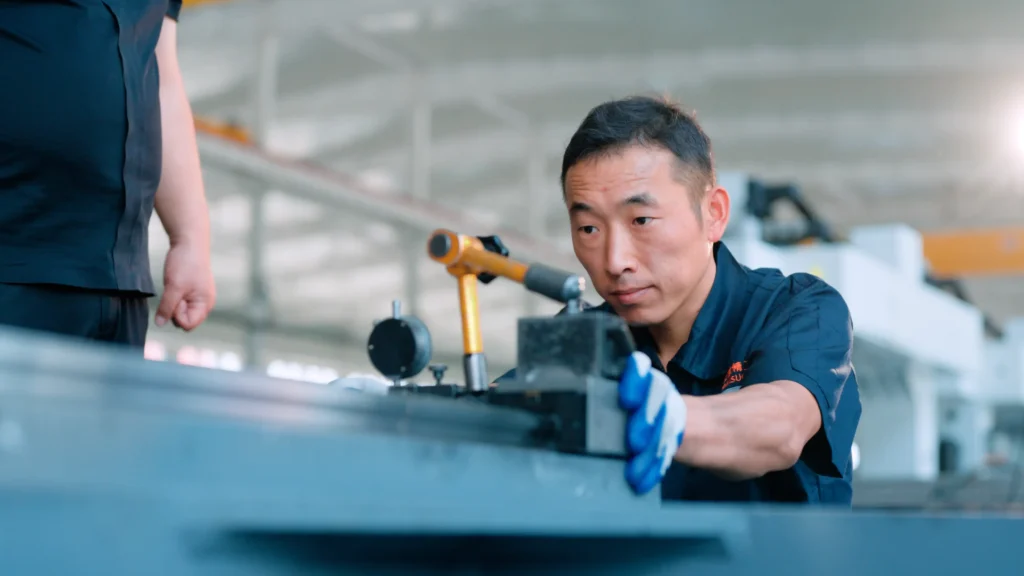
2. Key CNC Gantry Mill Precision and Specifications to Prioritize
Forget the flashy, meaningless specs. Focus on these 5 core details that define how your machine will actually perform.
(1) Machine Structure & Rigidity
This is the No. 1 detail — more important than spindle speed or travel. Rigidity is the foundation of consistent, clean cuts.
A well-built gantry mill will have:
- Heavy cast iron frame (thick walls to cut down on vibration)
- Dual-column fixed gantry (no side-to-side wobble)
- Reinforced crossbeam (doesn’t sag under heavy cutting loads)
What This Means for You: Less vibration = smoother part finish + tighter dimensions + longer tool life.
(2) X/Y/Z Axis Travel Range
Travel tells you the biggest workpiece you can fit. Standard industrial sizes look like this:
- X-axis: 1500–6000 mm (can go to 12000mm for large parts, custom-built)
- Y-axis: 1000–3000 mm
- Z-axis: 600–1200 mm
Word of Warning: Longer travel needs stronger rigidity. A long, flimsy machine will warp from heat and drift out of position — ruining your parts.
(3) Spindle System (Power, Speed & Torque)
The spindle is the workhorse of the machine. Match these specs to what you’re cutting:
- Heavy cutting speed: 6000–8000 rpm (balances torque and speed)
- Spindle taper: BT40 (medium loads) / BT50 (heavy duty, industry standard)
- Power: 11–22 kW (bump higher for steel or tough metals)
Quick Material Match:
- Nylon, aluminum, soft materials: Higher speed = smoother finish
- Steel, titanium, hard alloys: Higher torque = stable, chatter-free cuts
(4) Guide Rails & Transmission
Cheap rails and screws kill precision fast. Top machines use premium parts certified by ISO 230 :
- High-precision linear guideways (hold heavy loads, low friction)
- Precision ground ball screws (no backlash, consistent positioning)
These parts keep movement smooth, hold accuracy over time, and cut down on maintenance headaches.
(5) Workbench Load Capacity
Don’t skip this — especially if you run big, heavy parts. Standard load ranges:
- Light-duty: 1500 kg (small, light parts)
- Heavy-duty: 20,000 kg+ (large mold bases, steel fabrications)
Hard Rule: Overload the table, and you’ll get sagging, fast wear, and permanent precision loss.
3. Why “Specifications Alone” Can Be Misleading
So many buyers compare machines by numbers alone — then wonder why production is a mess.
Two machines with the same travel, speed, and tolerance can perform night and day differently. The difference is in the build rigidity and quality.
Real Customer Story:
A shop making nylon auto parts fought constant vibration, bad finishes, and 15% scrap for months. They switched to a stiffer gantry mill with the *same listed specs*:
- Scrap dropped below 2%
- Surface finish improved by 80%
- Overall efficiency jumped 30%
The takeaway: Specs only tell half the story. Build quality and stability make the real difference.Still unsure which specs actually matter for your parts?
Choosing the wrong configuration can cost thousands in scrap, downtime, and rework.
4. What CNC Gantry Milling Machine Precision Do You Actually Need?
Ultra-high precision costs more — and most jobs don’t need it. Use this simple shop guideline:
- ±0.05 mm: Basic parts (frames, brackets, non-critical pieces)
- ±0.02 mm: Standard industrial parts (most mechanical components)
- ±0.01 mm: High-precision parts (molds, aerospace, medical)
Cost Saving Note:
- Over-spec precision = higher upfront cost + more expensive maintenance
- Under-spec precision = bad parts, rework, lost customers
5. How to Choose the Right CNC Gantry Machine
Before you sign a purchase order, ask yourself these 4 practical questions to nail CNC gantry milling machine precision & specifications matching:
- What material am I cutting most (aluminum, steel, plastic, composite)?
- What tolerance do my parts *actually* require?
- What’s the max size and weight of my workpieces?
- Do I care more about speed, or holding tight accuracy?
Final Buying Truth: The best machine isn’t the priciest one, or the one with the highest numbers. It’s the one that fits your exact job.
6. Need Help Choosing?
If you’re not sure which machine fits your line, or you want a second opinion on specs, check our CNC Gantry Mill Selection Guide or reach out — our team has the shop experience to help.
We offer straightforward, no-fluff help:
- Custom machine picks based on your parts
- Real-world machining solution checks
- Set up advice for the spindle, rails, and controls
7. Accuracy vs Rigidity: Why Specs Don’t Tell the Whole Story
Many buyers focus on accurate numbers, but ignore rigidity.
Accuracy is what the machine is designed to achieve.
Rigidity is what allows it to maintain that accuracy during cutting.
Without sufficient rigidity:
- Vibration increases
- Tool deflection occurs
- Actual tolerance cannot be maintained
In real machining, rigidity is what turns theoretical accuracy into consistent production results.
8. FAQ About CNC Gantry Mill Precision and Specifications
Q1: How accurate is a CNC gantry milling machine?
Most industrial machines achieve:
- ±0.01 mm positioning accuracy
- ±0.005 mm repeatability
However, real-world accuracy depends more on machine rigidity and setup than just specs.
Q2: Is higher precision always better?
No.
Higher precision machines cost more and require stricter maintenance.
👉 If your parts only need ±0.02 mm, buying a ±0.005 mm machine is unnecessary.
Q3: What affects machining accuracy the most?
The biggest factors are:
- Machine rigidity
- Spindle stability
- Tool quality
- Cutting parameters
👉 Specs alone do not guarantee performance.
Q4: Can a CNC router achieve the same precision?
For soft materials, sometimes yes.
But for:
- Heavy cutting
- Tight tolerance
- Long-term stability
👉 Gantry milling machines perform significantly better.